🧐 Why build a proactive visual copilot?
Most software is static — it doesn’t adapt to you.
🤖 A proactive visual copilot changes that:
- Anticipates what you need next (from past behavior)
- Surfaces guidance in context — before you ask
🧠 Why visual? It’s how humans think fastest:
- Less cognitive load
- Matches the UI you’re already looking at
- Tighter loop: understand → act
The UI is the lowest common denominator every product offers. But every user is their own edge case.
Today’s products only ship LCM experiences — docs, videos, onboarding flows — none personalized.
✨ A proactive visual copilot digests your UI + docs + tutorials → personalised guidance per user.
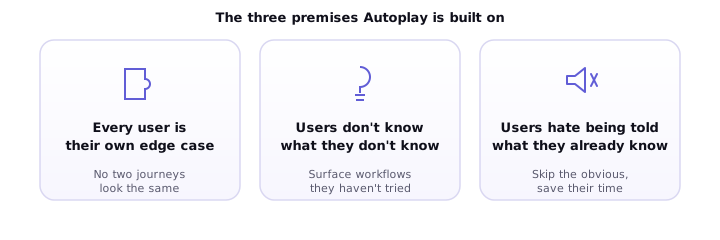
🧱 Built on 3 assumptions:
- Every user is their own edge case
- Users don’t know what they don’t know
- Users don’t want to be told what they already know